
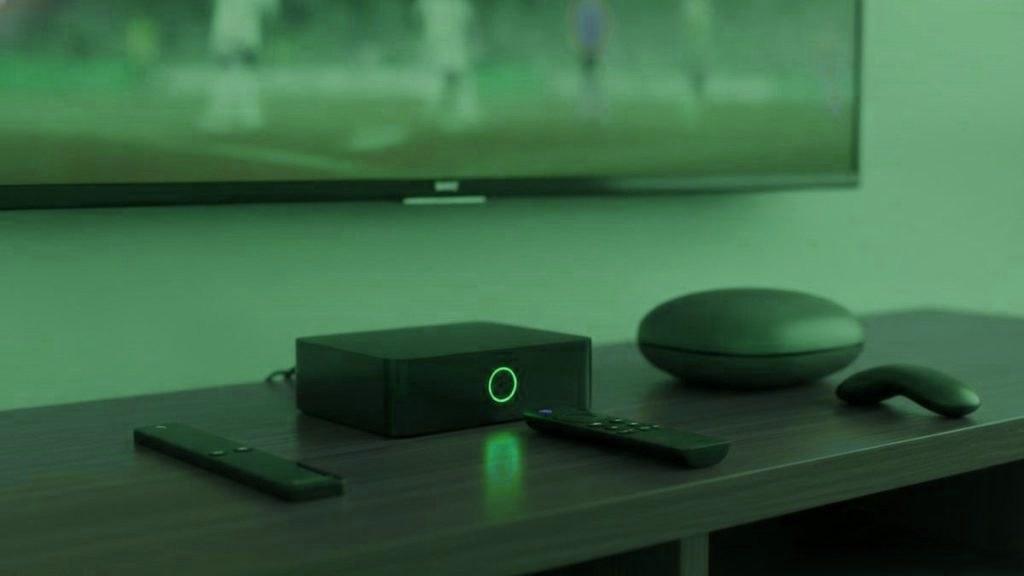
Almost everybody shopping for IPTV hardware is solving the wrong problem. The picture is limited by your connection, then by the stream, then by the television, and only then by the box. Spending more on the box while the first three are unchanged buys nothing you can see. This is an attempt to say where the money genuinely helps and where it stops, which is a less satisfying article than a ranked list but a more useful one.
The short version
Under $50 buys everything most people need. $150 to $200 buys a better remote and a faster guide on a main television. Beyond that you are buying speed that IPTV does not use. Your wifi is more likely to be the limit than any of it.
What actually limits the picture
In order, and the order matters because people intervene at the wrong point.
Your connection. About 10 Mbps carries HD and 25 carries 4K, and steadiness counts for more than the headline figure, because a stream breaks on the gaps rather than on the average. A television at the far end of the house on a congested band will struggle on any hardware ever made.
The source. A channel not produced in 4K will not become 4K, and no box upscales its way out of that. This is worth internalising before spending anything: most channels, most of the time, are broadcast in HD, and that is a decision made by broadcasters rather than by your equipment.
The television. A 1080p panel displays 1080p. A 4K panel without HDR displays 4K without HDR.
The box. Last, and it only becomes the limit once the three above are not.
Under $50: where most people should stop
The Fire TV Stick 4K Max at $30 to $50 handles 4K, takes every IPTV app by sideload, and is adequate for the overwhelming majority of households. The ordinary Fire TV Stick 4K is much the same for slightly less. Chromecast with Google TV 4K sits in the same bracket and has the advantage of the Play Store, meaning no sideloading at all.
One thing to avoid at this end: the Fire TV Stick Lite. It runs the same software and the setup is identical, but it outputs 1080p, so a subscription’s 4K feeds will never reach the screen. If you are indifferent to 4K it is fine, and if you are not it is a false economy.
The other thing to avoid is the unbranded Android box at a suspiciously low price. Under 2 GB of memory, or a specification that turns out to be fiction, produces stuttering that then gets blamed on the subscription. A remarkable number of provider changes are actually bad boxes.
$150 to $200: what the money buys
The Formuler Z11 Pro Max and the MAG range at $120 to $180 were built for this and nothing else. What you are buying is not picture quality, which will be identical to the stick’s on the same stream. It is the experience around it: a better remote, a faster guide, nothing to sideload, and a device that boots into television rather than into an app grid.
On a main set watched daily that is a genuine improvement and worth the difference. On a spare bedroom television it is money spent on something nobody in the house will remark upon. That is the whole of the case for it, honestly stated.
One practical point: the Formuler accepts a portal, an Xtream login or Android players including TiViMate, while a MAG is portal-only and needs its MAC address sent to your provider before it will do anything. The Formuler is the more flexible purchase and the one we would suggest of the two.
The Nvidia Shield sits here in price and above it in capability. It is genuinely the fastest of these devices and excellent at everything, including a great deal that has nothing to do with IPTV. For IPTV specifically, the speed is mostly unused, and it costs more than a year of subscription. Buy it because you want a Shield, not because you expect it to improve a stream.
Above that: what stops mattering
Past roughly $200 the extra processing does not reach the picture, because nothing in this chain is asking for it. Decoding a 4K stream is not demanding work for modern hardware. Additional speed shows up in menu responsiveness and in other uses entirely.
The money is better spent, in descending order of effect, on: an ethernet cable or adapter for the main television; a better router if yours is provided by your internet company and several years old; and a longer subscription term. That ordering is not exciting, and it is where the visible improvement actually is.
Matching hardware to a household
One main television, watched daily, sport matters: a Formuler Z11, or a Fire TV Stick 4K Max plus an ethernet adapter and TiViMate Premium, which lands considerably cheaper and gets you most of the way.
Several televisions: sticks on all of them. Consistency across rooms is worth more than a better device in one, and you will be the person configuring every one of them.
A modern Samsung or LG: possibly nothing at all. The set runs IPTV Smarters or Smart IPTV from its own store, and a box is worth adding only if you specifically want TiViMate.
A Roku household: add a stick to a spare input. Roku blocks sideloading and its store listings for these players come and go, which makes it the one platform where the hardware answer is to work around it rather than with it.
Before you buy anything
Take a test line and try the service on what you already own. A striking proportion of the time the existing television turns out to be fine, and the money set aside for a box goes on an ethernet cable instead. Finding that out costs nothing and takes an evening, which is a better sequence than buying hardware to fix a problem you have not yet diagnosed.
How to tell whether your box is actually the problem
Before replacing hardware, it is worth ten minutes establishing that the hardware is at fault, because in our support traffic it usually is not.
Put the same credentials on a laptop sitting beside the router and play the channel that was misbehaving. If it runs cleanly there, your line and the servers behind it are fine, and the fault lies somewhere between your router and that television — which could be the box, but is more often the wifi. If it fails on the laptop too, the box was never the issue and buying a new one would have changed nothing.
Next, move the existing box onto a cable, even temporarily, by trailing one across the floor for an evening. If the stuttering stops, you have found it, and a twenty-dollar adapter is the whole solution.
Then check the decoder setting inside the player, which on a Firestick in particular is behind a startling share of poor first impressions. Software decoding on hardware that wanted hardware decoding produces exactly the symptoms people attribute to a weak device.
Only once those three have been ruled out is the box genuinely the limiting factor. At that point an upgrade will help, and until then it is an expensive way of not fixing the problem — which is worth knowing before spending a hundred and eighty dollars on a diagnosis nobody performed.
Frequently asked questions
What is the best box for IPTV?
For most households, a Fire TV Stick 4K Max at $30 to $50, and stopping there. A Formuler Z11 at $120 to $180 is a real improvement on a main television through its remote and guide, not through picture quality. Anything beyond about $200 buys capability that IPTV does not use.
Will a more expensive box improve the picture?
Almost never. The picture is limited by your connection, then by what the broadcaster produced, then by your television. A box only becomes the limit once those three are not, which is uncommon. Money spent on an ethernet cable will do more for a stuttering stream than money spent on hardware.
Is the Nvidia Shield worth it?
It is the fastest device here and excellent generally, but for IPTV specifically most of that speed goes unused and it costs more than a year of subscription. Buy one because you want a Shield for everything it does. Do not buy one expecting a better stream.
Is the Fire TV Stick Lite good enough?
It runs the same software and sets up identically, but it caps at 1080p, so the 4K feeds you are paying for will never appear. If 4K is irrelevant to you it is perfectly serviceable. If it is not, spend the extra on the 4K Max.
Formuler or MAG?
Formuler, for most people. It accepts a portal, an Xtream login or Android players including TiViMate, so it keeps its options open. A MAG is portal-only and needs its MAC address activated by your provider first. The price difference is small and the flexibility is worth having.
Do I need to buy anything at all?
Frequently not. A smart television from 2016 onward, a games console, a phone or a laptop will all do the job. Take a test line and find out on what you already have before spending anything — it is the cheapest step in this entire process and it is the one people skip.
My stream stutters. Should I buy a better box?
Not until you have checked three cheaper things. Play the same channel on a laptop next to the router to establish whether the line is fine. Put the existing box on an ethernet cable for one evening. Check the decoder is set to hardware in the player. In our experience the box is the answer considerably less often than any of those three.
Check it yourself before you pay for it
Ask on WhatsApp for a 24-hour test line, open the channels you actually care about, then judge. Paid access follows in under 15 minutes, reversible for 7 days.
Related articles
Choosing an IPTV App by What Actually Constrains You
Your platform eliminates most of the field before preference comes into it. Decide by constraint in three steps, and stop as soon…
September 2, 2026The Real Cost of IPTV Once Everything Is Counted
The monthly figure is the smallest part of it. Subscription, hardware, third-party app fees, bandwidth, and the line item nobody budgets for,…
August 31, 2026Three Different Legal Questions People Ask About IPTV
Three legal questions get tangled together here: the technology, whether a provider holds the rights, and your own exposure. Separated, and answered…